Alternatives to ‘Defra courses’ for industrial working in and near water
Rescue 3 Europe and its training providers are often asked for a “Defra course”. Whilst Rescue 3’s courses for emergency responders and rescue teams are Defra compliant, a ‘Defra course’ isn’t always the best fit for an organisation. What are the other options for water safety training, particularly if they are EA, SEPA, NRW personnel, construction industry workers, or road and bridge maintenance workers?
Which course do I need?
Rescue 3 Europe has a wide range of water safety and rescue courses, tailored to a diverse range of different clients. Below is a simplified flowchart of some of these courses, to help you choose the right course for you.
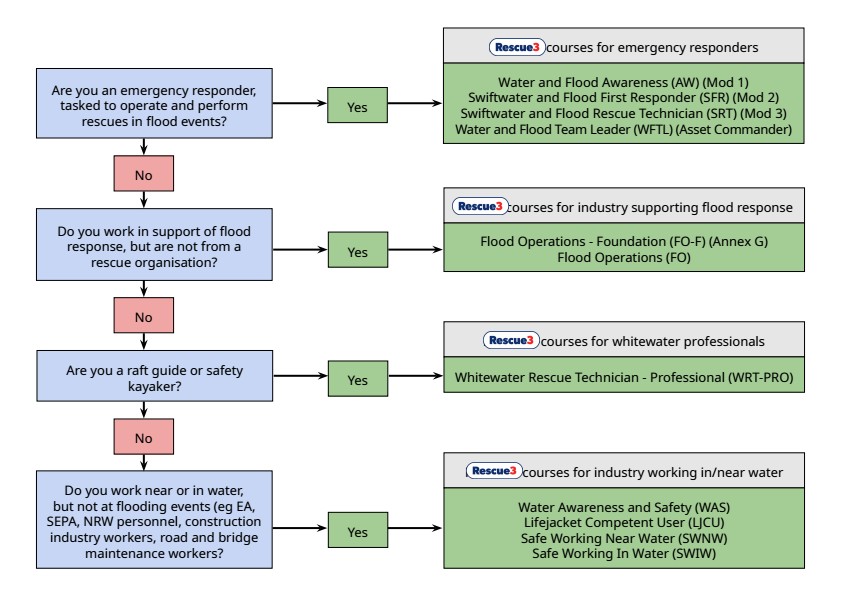
We will look in detail at the reasons why industry, construction and environmental planners and workers are usually better served by a Safe Working Near Water (SWNW) or Safe Working In Water (SWIW) course, and the other courses in the suite of courses for industry working in/near water.
Who is accrediting the course?
It’s worth noting that there’s no such thing as a ‘Defra course’. Defra isn’t an accrediting body for water rescue training. Water rescue training courses can be ‘Defra-compliant courses’, as Rescue 3 Europe’s suite of courses for emergency responders and rescue teams are. For these courses, Rescue 3 Europe is the accrediting body, with all that entails.
Defra compliance only means that a course conforms to criteria laid out by Defra, it doesn’t mean that Defra have in any way validated the course.
When you take a Defra-compliant Rescue 3 course, it’s Rescue 3 Europe who oversees that course, establishing best practice, setting and assessing criteria for training providers, instructors, students, and the courses they deliver/teach, as well as recording and monitoring all training records and incident reports within its world-leading training provider database.
If someone is selling you a ‘Defra course’, or more accurately a ‘Defra compliant course’, your questions should be:
“Am I tasked to operate in floods as part of a rescue asset?”
If you are not tasked to operate in floods as a rescue asset, or part of their support network, then a Defra-compliant course isn’t right for you, and you may want a course from the suite of courses for industry working in/near water.
“Who is providing the external accreditation of that course?”
For all our training providers, the answer to that question is Rescue 3 Europe.
What is the Flood Rescue Concept of Operations?
Defra’s Flood Rescue Concept of Operations (known colloquially as the ConOp or the FRCO) “sets out the processes for managing and maintaining flood rescue capability, and the national coordination of flood rescue assets in England”.
The original Defra ConOp was published in 2012. A revised version was published in 2019, and then again in 2025.
The ConOp covers many elements of operating in flood events, including the processes for registering as a national asset, and minimum equipment requirements for teams on the national asset register. A large proportion of the ConOp is given over to minimum training standards, and it is these that people are specifically referring to when they talk about a ‘Defra course’.
Who uses (and misuses) the Defra ConOp?
If we strictly interpret the scope of Defra’s Flood Rescue Concept of Operations (ConOp), it is specifically for flood rescue teams from England who are on the National Asset Register relating to flood event response.
However, in practice, it is also referred to by a number of organisations outside of its scope, including:
- Water/flood rescue teams from England who aren’t part of England’s National Asset Register.
- Flood rescue teams from other countries in the UK (Wales, Scotland and Northern Ireland).
- Flood rescue teams from other countries in Europe and the rest of the world who compare it with their own equivalent national/local frameworks.
- Flood rescue teams from other countries in Europe and the rest of the world where no such frameworks exist.
- People operating near and in water, but not responding to flood events, including raft guides, industry and infrastructure, environmental protection and monitoring organisations.

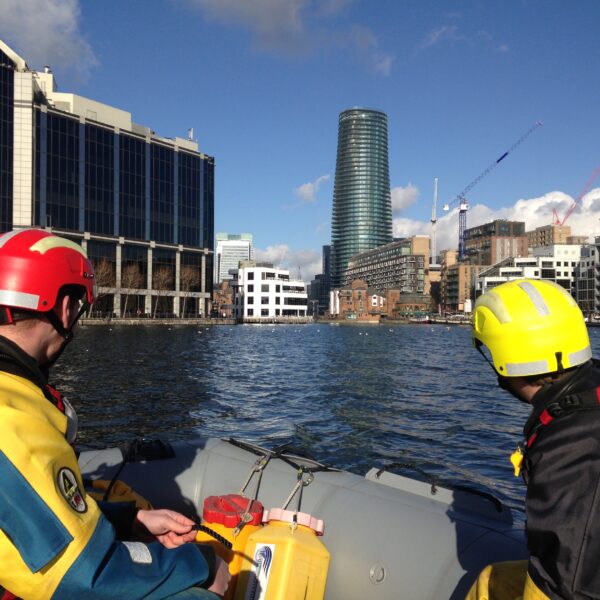

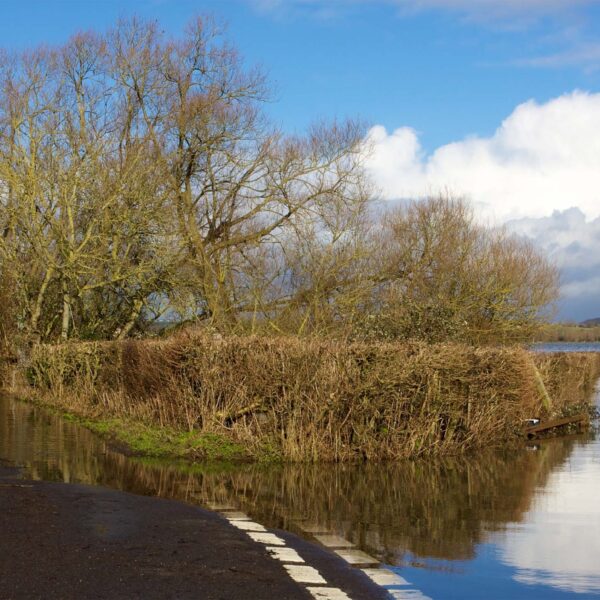

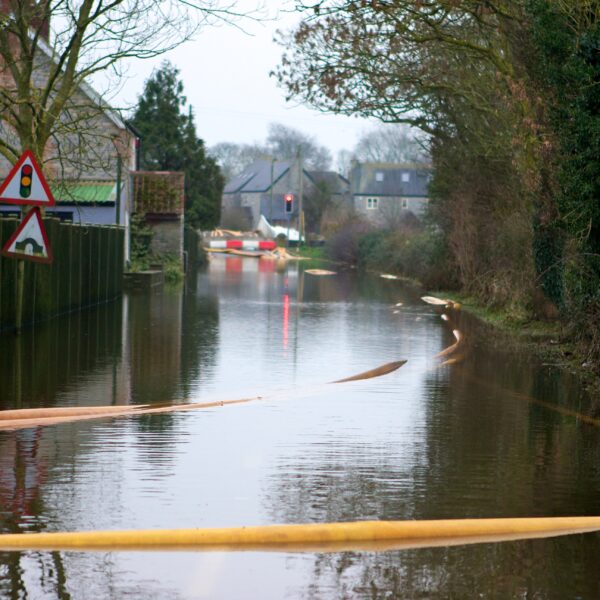

For flood rescue teams outside of the ConOp’s scope, it’s certainly a useful frame of reference. The actual level of training undertaken by a flood rescue team should be the same whether they are in Reykjavik, Glasgow, Manchester, Geneva, Zagreb or Athens. Rescue 3’s Swiftwater and Flood Rescue Technician (which meets the requirements of Defra Mod 3) is the standard to which flood rescue teams train in these cities and beyond. Rescue 3’s standard truly is global, which is a key strength when considering multi-agency and multi-jurisdictional wide scale flooding events.
For people who operate near and in water, but don’t respond to flood events, what relevance does a Defra compliant course have for them? What do they benefit from learning about the unique challenges and operational requirements within floods?
The equipment that a raft guide can carry with them whilst with a group of clients is clearly different to the equipment that a fully-stocked water rescue team can carry on their team vehicle.
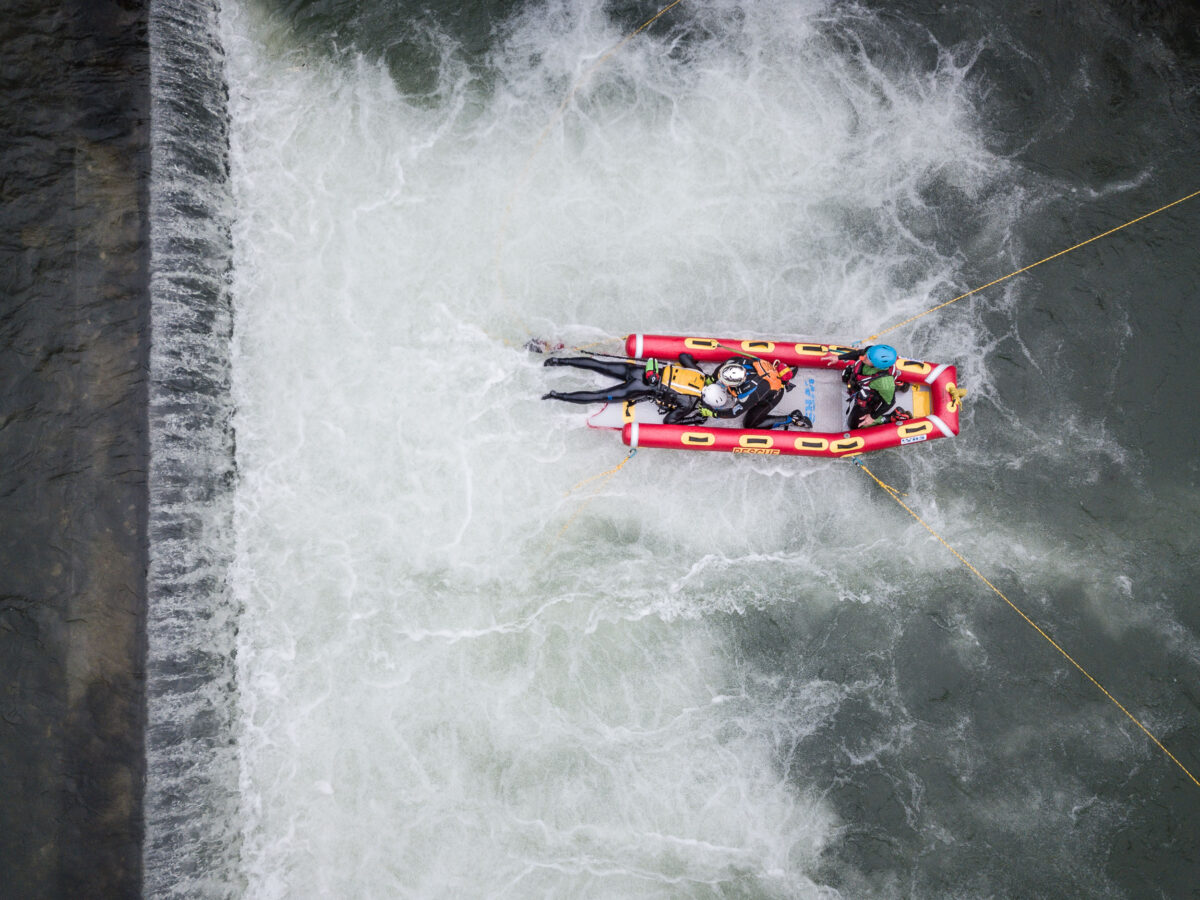
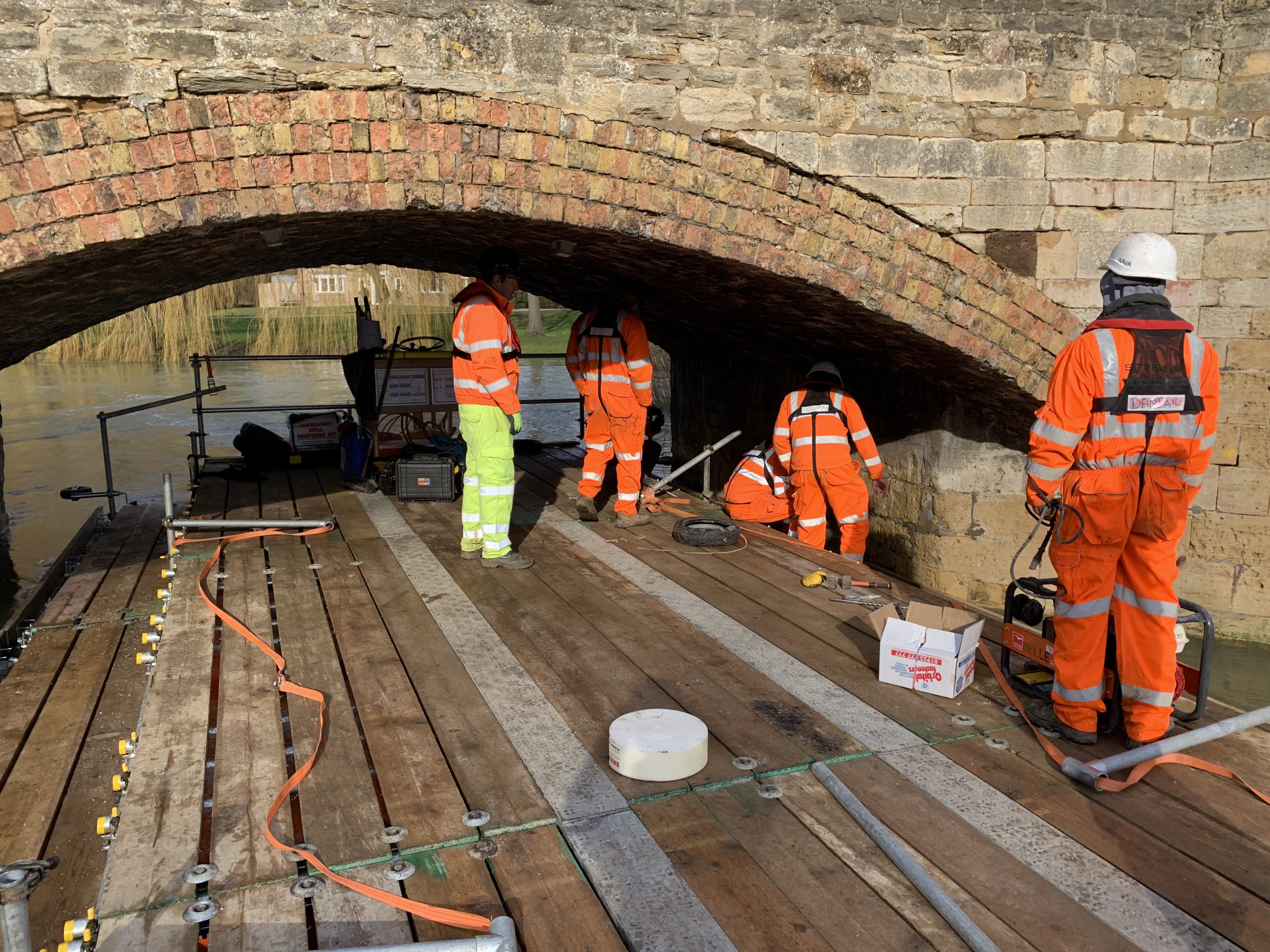
Someone taking water samples, or undertaking construction work near water, is unlikely to need a full rescue capability. The risk assessment might identify that they need a self-rescue capability, or perhaps a co-worker rescue capability in the unlikely event of an emergency. It’s unlikely that they will need the same level of training as a rescue team, responding to an ongoing incident. They’re highly unlikely to be issued with the technical equipment that a rescue team would use to set up a boat on a highline or a tensioned diagonal, for example.
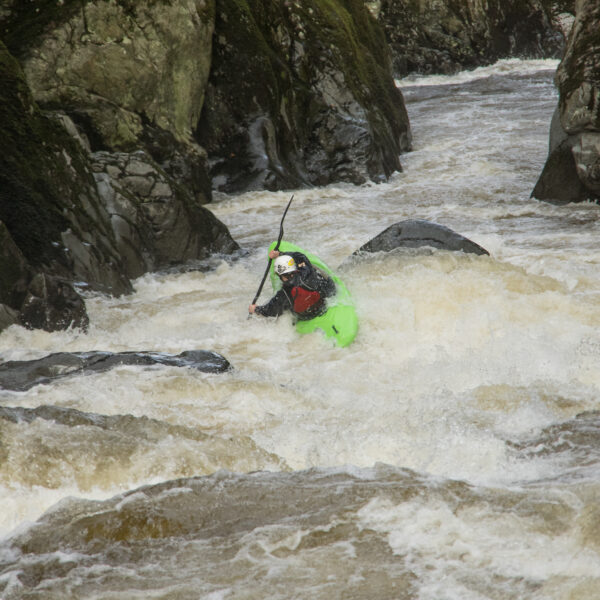
For the raft guide, or the recreational river user, they’re better served by the whitewater suite of Rescue 3 courses.
For industry, construction, environmental protection and monitoring, they’re best served by the industrial working in/near water suite of Rescue 3 courses. Please refer to the Rescue 3 Europe course standards, learning outcomes and key teaching points.
Establishing credibility
For organisations and busy managers, perhaps looking for or writing tenders for training for staff outside their usual area of expertise, it can be difficult to know who has the credibility to deliver the appropriate training for them. When people see ‘Defra course’, or more accurately ‘Defra compliant course’, they see that as a badge of credibility. They see the course that the flood rescue teams use, and think that’s the course for them. As we’ve established, they are better served by a course focussed on their particular operational needs. This is where Rescue 3 Europe offers the credibility that they require.
Currently, about 75% of the UK fire and rescue services receive training accredited by Rescue 3 Europe, either from commercial Rescue 3 training providers, or (as about 50% of the UK fire and rescue services do) with qualified Rescue 3 instructors delivering in-house. Similarly, over 90% of the mountain rescue teams in England and Wales, as well as lowland rescue teams, ambulance HART and police teams receiving and/or delivering Rescue 3 training according to the Rescue 3 syllabus. Many of these are part of the 50 or so organisations who register as national assets with Defra, and rightly operate under the complementary standards of Rescue 3 Europe and Defra’s Flood Rescue Concept of Operations.
By offering water safety and rescue courses beyond just flood rescue courses, Rescue 3 Europe ensures that its courses are appropriately pitched to the specific needs of clients, whilst still ensuring accrediting body oversight and development of course standards reflecting best practice.
There is a commonality of techniques on, say, a Swiftwater and Flood First Responder course (designed for emergency services) and a Safe Working In Water course (designed for industry). They both include shallow water wading techniques, as well as throwbag rescues and other conditional rescues. However, by offering courses tailored to particular areas of operation, and delivered specifically by instructors and training providers with those same areas of expertise, clients and organisations booking a Rescue 3 course can be sure that they will receive the best possible training appropriate to them.
Rescue 3 Europe oversees more than 150 training providers and over 1,250 instructors throughout Europe. They have delivered training to more than 2,000 organisations, with over 12,500 students per year undergoing Rescue 3 training within Europe. By setting standards for, and drawing experience from, these wide-ranging groups, you can be sure that developments in best practice in one area are shared and applied to other relevant areas of technical rescue and safety training.
Other complementary standards
Although we’ve looked specifically at Defra’s Flood Rescue Concept of Operations here, it’s worth noting that there are other complementary standards to Rescue 3 training. For example, in North America, the NFPA standards provide norms for water and technical rescue practices and equipment. For raft guides, whilst they might look to Rescue 3 courses for their rescue capability, it’s the IRF standards that they rightly look to for all other aspects of raft guiding.
Such standards can go hand-in-hand with each other, each focussing on their particular area of relevance. Rescue 3 Europe’s standards nerds (the most interesting and good-looking people you’re ever likely to meet) spend much of their time not only developing the Rescue 3 standards, but analysing and cross-checking other complementary standards, to ensure that the needs of all client groups are being appropriately met.
Conclusion
Rescue 3 Europe has an extensive range of water rescue and safety training courses, whoever the target audience is. There are courses for industry working on or near water, emergency responders and rescue teams and whitewater professionals. There are also specialist training courses for vehicle rescue, canyon water rescue and search. A Rescue 3 Europe training provider near you, or Rescue 3 Europe’s head office, are happy to speak with you to help you choose the right Rescue 3 course for your particular operational needs.
Published: 19th Mar 2022